
Cooling Gel Wedge Pillow The Best Sleep Solution for Hot Sleepers Who Need Supportive Elevation Without the Heat
You finally found the relief of sleeping on an incline. Less reflux, easier breathing, a calmer back. Then the heat shows up. The foam warms under your shoulders, the sweat starts, and you spend half the night flipping for a cooler spot. If you run warm, a standard wedge pillow can feel like sleeping on a heating pad. That’s where a cooling gel wedge pillow changes the game.
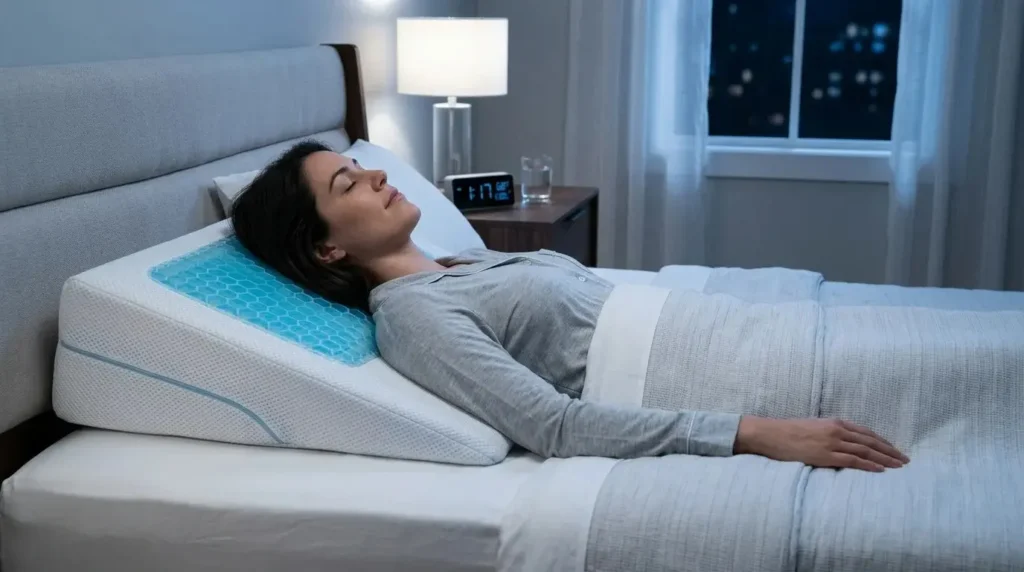
A cooling gel wedge pillow gives you the same supportive slope you need, but with a built-in layer that pulls heat away from your body. You get the benefits of elevation without the trapped warmth that ruins your sleep. In this guide, you’ll learn exactly what a cooling gel wedge pillow is, how the gel actually works, why hot sleepers struggle with regular foam, the best ways to use it, and how to choose one that keeps you cool for years.
Key takeaways:
- A cooling gel wedge pillow combines supportive elevation with a heat-wicking gel layer that keeps the surface cooler.
- Standard memory foam traps body heat, which makes hot sleepers and night-sweat sufferers miserable.
- Gel-infused and open-cell foam both fight heat, but in different ways worth understanding.
- The right incline depends on your need, from 7 to 12 inches for the upper body to 6 to 10 inches for legs.
What Is a Cooling Gel Wedge Pillow and How the Gel Layer Regulates Temperature
A cooling gel wedge pillow is a triangular support cushion that elevates your upper body or legs on a steady slope, with a special cooling component built in. Instead of plain foam that warms up as you lie on it, this design adds gel technology to keep the surface temperature down.
The gel usually shows up in one of two ways. Some wedges have a layer of gel beads or a gel pad sitting near the top surface, just under the cover. Others use gel that’s blended directly into the memory foam, called gel-infused foam. Both work toward the same goal: moving heat away from your skin so you don’t overheat.
Here’s the simple science. Your body gives off heat all night. Regular memory foam absorbs that heat and holds onto it, which is why it feels warm after a while. A gel layer acts like a heat sink. It draws warmth out of the spots where your body presses down, spreads it across a wider area, and releases it away from you. The result is a surface that stays cooler and feels more comfortable through the night.
Think of it like the difference between a warm wool blanket and a cool pillowcase. Same support underneath, very different feel against your skin. The gel doesn’t refrigerate the pillow, but it stops heat from building up where you need comfort most.
Takeaway: A cooling gel wedge pillow pairs a supportive incline with gel technology that pulls heat away from your skin, so you get elevation without the trapped warmth.
Why Hot Sleepers Struggle With Standard Memory Foam Wedge Pillows
Memory foam is wonderful for support, but it has one well-known weakness: it holds heat. For hot sleepers, that weakness can undo all the benefits of an incline.
How Memory Foam Traps Body Heat
Standard memory foam is dense and closed in structure. It molds closely to your body, which feels great for support, but that close contact also means very little air can move between you and the foam. Your body heat gets absorbed and stays put.
The more of your body that touches the foam, the more heat builds up. On a wedge pillow, your back, shoulders, and neck rest against a large surface, so warmth collects fast. By the middle of the night, that cozy contour starts to feel like a warm trap.
The Real Cost for Hot Sleepers
If you already run warm, this heat buildup does more than annoy you. It disrupts your sleep cycle. Your body needs to cool down slightly to fall and stay asleep, and a hot surface fights that natural process.
The result is familiar to many people: tossing, flipping the pillow, kicking off covers, and waking up sweaty. You bought the wedge for relief, but the heat keeps stealing your rest anyway.
Who Feels This Most
Some people notice the heat far more than others. You’re especially likely to struggle with standard foam if you:
- Naturally sleep hot or sweat easily at night
- Go through menopause and deal with night sweats and hot flashes
- Live in a warm climate or sleep in a room without strong cooling
- Take medications or have conditions that raise body temperature
For these sleepers, a regular memory foam wedge often trades one problem for another. A cooling gel design solves the support and the heat at the same time.
Takeaway: Standard memory foam traps body heat because of its dense structure, which makes hot sleepers and night-sweat sufferers overheat and lose the rest a wedge is supposed to provide.
The Science of Gel-Infused and Open-Cell Foam Cooling
Cooling wedge pillows use a few different technologies to fight heat. Understanding them helps you choose the right one for how warm you sleep.
Gel-Infused Memory Foam
Gel-infused foam blends cooling gel particles right into the memory foam itself. These gel beads absorb heat from your body and pull it away from the surface, slowing the heat buildup that plain foam suffers from.
The benefit is that you keep all the contouring and support of memory foam while reducing how warm it gets. The gel adds a heat-absorbing quality without changing how the foam cradles your body. For most hot sleepers, this is a big step up from standard foam.
Open-Cell Memory Foam
Open-cell foam takes a different approach. Instead of adding gel, it changes the foam’s structure to include more tiny, connected air pockets. Those open cells let air flow through the foam far more freely than dense, closed foam allows.
Better airflow means heat and moisture escape instead of getting trapped against your skin. Open-cell foam breathes, which keeps the surface cooler naturally. Many quality cooling wedges combine open-cell structure with gel infusion for the best of both worlds.
Gel Layers and Cooling Covers
Some wedges add a separate gel pad or layer near the surface for an immediate cool-to-the-touch feel. Others pair the foam with a breathable cover made from moisture-wicking fabric. These covers pull sweat away from your skin and let it evaporate, adding another layer of temperature control.
The strongest cooling wedges often stack these technologies together: gel-infused, open-cell foam under a breathable, moisture-wicking cover. Each piece tackles heat from a different angle.
Takeaway: Gel-infused foam absorbs heat, open-cell foam improves airflow, and breathable covers wick moisture, and the best cooling wedges combine all three for maximum temperature control.
Best Use Cases for a Cooling Gel Wedge Pillow
A cooling gel wedge pillow handles the same range of needs as any quality wedge, with the added benefit of keeping you cool while it works. Here’s where it makes the biggest difference.
Acid Reflux and Nighttime Heartburn
Lying flat lets stomach acid flow back into your esophagus. A cooling gel wedge lifts your upper body so gravity keeps acid down, and the gel layer means you won’t overheat while staying elevated all night. For a full breakdown of angles and positioning, see our guide on the Wedge Pillow for Acid Reflux.
Back Pain and Spinal Support
Placed under your upper body or your knees, a cooling wedge supports your spine and eases lower back pressure, while the cooling surface keeps you comfortable enough to relax fully. Heat can make pain feel worse, so a cooler surface helps in two ways at once. Our Wedge Pillow for Back Pain page covers the best positions in detail.
Snoring and Easier Breathing
Raising your head and shoulders helps keep your airway open and reduces snoring. A cooling gel wedge holds that incline without the heat buildup that makes you toss and lose your position. Our Wedge Pillow for Snoring page explains how elevation opens the airway.
Leg Elevation and Circulation
Flip the wedge under your legs to raise your calves toward heart level, improving circulation and reducing swelling. The cooling surface is a real plus here too, since warm, swollen legs feel even better against a cool, breathable slope.
Menopause Night Sweats and Hot Flashes
This is where a cooling gel wedge truly stands out. If night sweats and hot flashes wreck your sleep, a cooling design helps you stay elevated for reflux or breathing without adding heat to an already warm night. Many women find a cooling wedge makes incline sleeping bearable during menopause.
Post-Surgery Recovery
After many procedures, lying flat is uncomfortable, and recovery can leave you feeling warm or feverish. A cooling gel wedge keeps you elevated and supported while the cool surface adds comfort during a sensitive healing period.
Takeaway: A cooling gel wedge eases reflux, back pain, snoring, and swelling, and it’s especially valuable for menopause night sweats and post-surgery recovery where heat makes everything harder.
Recommended Incline Angles and Heights for a Cooling Gel Wedge Pillow
The right angle depends on what you’re using the wedge for, so there’s no single perfect number. Too little lift does nothing, and too much sends you sliding down the bed. Here’s a quick reference to guide you.
- Acid reflux, GERD, and snoring: Aim for a 30-to-45-degree incline, roughly 7 to 12 inches tall. This lifts your upper body enough to use gravity while staying comfortable for sleep.
- Upper-body back support: A 30-to-45-degree incline works well, paired with a small pillow under your knees to keep your spine aligned.
- Knee elevation for lower back relief: A gentler 6-to-8-inch lift raises your knees without straining your hips.
- Leg elevation for swelling and circulation: A 6-to-10-inch height lifts your calves toward heart level.
One rule holds across all of them. Lift your whole upper body in one smooth slope rather than just your head, since propping only your head bends your neck and can make reflux or snoring worse. Start moderate and adjust over a few nights until it feels right. With a cooling wedge specifically, make sure the gel layer or cooling surface sits where your body presses down most, so you actually feel the benefit.
Takeaway: Use a 30-to-45-degree incline, roughly 7 to 12 inches tall, for upper-body needs, and a gentler 6-to-10-inch lift for legs, keeping the cooling surface under your main contact points.
Cooling Gel vs. Standard Memory Foam: A Direct Comparison
When you’re deciding between a cooling gel wedge and a standard memory foam one, the difference comes down to temperature without sacrificing support. Let’s compare them feature by feature.
Temperature Regulation
This is the headline difference. A cooling gel wedge actively manages heat through gel infusion, open-cell structure, or both, keeping the surface cooler all night. Standard memory foam absorbs and holds body heat, warming up the longer you lie on it. For hot sleepers, this gap is the whole reason to choose gel.
Support and Contouring
Here the two are close. Both contour to your body and hold a supportive incline, since cooling gel wedges are usually built on a memory foam base. You don’t give up support to gain cooling. A quality gel-infused wedge cradles your spine just as well as a standard one, only cooler.
Comfort for Hot Sleepers
A cooling gel wedge wins clearly for anyone who runs warm. The cooler surface prevents the sweaty, restless nights that standard foam causes. If you sleep cool already, you may not notice a huge difference, but if heat is your enemy, gel is a major upgrade.
Durability and Value
Both quality options last for years if well made. A standard memory foam wedge may cost a little less upfront, but for hot sleepers, that saving means little if the heat keeps you awake. A cooling gel wedge delivers comfort you’ll actually use every night, which makes it the better value for warm sleepers.
The bottom line: If you sleep cool, a standard memory foam wedge serves you fine. If you run warm, sweat at night, or deal with hot flashes, a cooling gel wedge gives you the same support without the heat, making it well worth the choice.
Takeaway: Cooling gel and standard foam offer similar support, but the gel version’s temperature control makes it the clear winner for hot sleepers and night-sweat sufferers.
What to Look for When Buying a Cooling Gel Wedge Pillow
Not every wedge labeled “cooling” actually keeps you cool. Some add a thin gel layer for marketing and little else. When you shop, focus on these features to make sure you get real temperature control.
Gel Layer Type and Placement
Look closely at how the cooling is built in. Gel-infused, open-cell foam offers cooling throughout, while a surface gel pad gives an immediate cool-to-the-touch feel. The best wedges combine both. Make sure the cooling sits near the surface where your body actually touches it, not buried deep in the base.
Cover Breathability
The cover matters more than many buyers realize. Choose a removable cover made from breathable, moisture-wicking fabric like a cooling mesh or a soft, airy weave. A breathable cover lets heat and sweat escape, working with the gel rather than trapping warmth against your skin.
Foam Density
You still want proper support, so check the foam density. A medium to medium-firm foam holds the incline under your weight while staying comfortable. Too soft and you sink in and lose the angle. The cooling features should sit on top of a foam base firm enough to do its job.
Size and Length
For upper-body use, look for a wedge long enough to support you from hips to head, roughly 24 to 32 inches, so your neck doesn’t bend and your torso stays supported. A wider base lets you shift positions to find a cool spot without rolling off the edge.
Takeaway: Prioritize gel-infused or open-cell cooling near the surface, a breathable moisture-wicking cover, medium-firm support, and enough length to support your full torso.
Best Sleeping Positions With a Cooling Gel Wedge Pillow
How you position yourself on the wedge decides how much relief and cooling you get. The best setup depends on your need and your favorite way to sleep. Here are the positions that work best.
Back Sleeping on an Upper-Body Incline
Lie back with your hips where the wedge flattens and your head near the top, so your whole torso follows the slope and rests against the cooling surface. This suits reflux, snoring, and breathing. Add a small pillow under your knees to keep your spine aligned and stop yourself from sliding down.
Side Sleeping on the Wedge
Side sleepers can rest their upper body along the incline and place a pillow between their knees to keep the hips and spine in line. The left side is often gentler for reflux. Choose a wider cooling wedge so you have room to shift to a fresh, cool spot without rolling off.
Legs Elevated on the Slope
For circulation and swelling, lie flat and rest the backs of your legs along the incline, with your calves and heels supported near the top. The cooling surface feels especially good against warm, tired legs. Make sure the wedge supports your full lower leg, not just your ankles.
Sitting Up for Reading or Relaxing
Set the wedge against your headboard at a steeper angle and lean back into the cooling surface for reading or watching TV. The cool feel keeps your back from getting sweaty during longer sessions, which is a small but real comfort.
Takeaway: Back sleeping on an incline suits reflux and snoring, side sleeping needs a knee pillow, and legs along the slope works well for circulation, with the cooling surface adding comfort in every position.
Who Benefits Most From a Cooling Gel Wedge Pillow
A cooling gel wedge pillow helps a wide range of people, but some gain far more than others. You’re an especially strong candidate if you fall into one of these groups.
- Hot sleepers who run warm at night and overheat on standard memory foam.
- Women going through menopause who deal with night sweats and hot flashes.
- Reflux or GERD sufferers who need nightly elevation but can’t stand a warm surface.
- People in warm climates or those without strong bedroom cooling.
- Snorers and light sleepers who want a steady incline without heat-driven tossing.
- Anyone recovering from surgery who feels warm or feverish during healing.
- People with swollen legs who want cool, breathable elevation for tired limbs.
If even one of these describes you, a cooling gel wedge pillow is likely worth the investment over a standard model.
Takeaway: Hot sleepers, menopausal women, reflux sufferers, and anyone in a warm environment gain the most from a cooling gel wedge pillow.
Common Mistakes to Avoid With a Cooling Gel Wedge Pillow
Even the right pillow can fall short if you choose or use it poorly. Here are the most common slip-ups and how to fix each one.
- Trusting the word “cooling” alone. Some wedges add a token gel layer with little real effect. Fix: check for gel-infused or open-cell foam plus a breathable cover.
- Burying the cooling under thick covers. A heavy, non-breathable cover or sheet traps heat and cancels the gel. Fix: use breathable, moisture-wicking bedding on top.
- Choosing a wedge that’s too short. A head-only wedge bends your neck and leaves your torso unsupported. Fix: pick a longer wedge that supports your full upper body.
- Picking foam that’s too soft. You sink in, lose the angle, and reduce airflow around your body. Fix: choose a medium to medium-firm cooling foam.
- Setting the incline too steep. Past 45 degrees, you slide down and wake up flat. Fix: stay in the 30-to-45-degree range for upper-body use.
- Skipping knee support on an incline. Without it, you slide down and arch your back. Fix: add a small pillow under your knees.
- Expecting refrigerator-level cold. Cooling gel reduces heat buildup, it doesn’t chill you. Fix: set realistic expectations and pair it with a cool room.
Takeaway: Most cooling wedge mistakes come from trusting marketing over real cooling features, smothering the gel with warm bedding, or choosing the wrong size and firmness.
Care and Maintenance Tips for a Long-Lasting Cooling Gel Wedge Pillow
A quality cooling gel wedge pillow is built to last, but a little care keeps both the support and the cooling working for years. These simple habits go a long way.
- Wash the cover regularly. Sweat builds up faster on a pillow you choose for hot sleeping, so wash the removable cover often to keep it fresh and breathable.
- Never machine wash the foam. Memory foam and gel layers can tear or break down in a washer. Spot-clean small stains with a damp cloth and mild soap, then let it air dry completely.
- Keep it dry. Moisture is the enemy of foam and can encourage odor. Dry any spills quickly and let the pillow air out if you sweat heavily.
- Let it breathe. When you first unbox it, give the foam a day or two to expand and air out. An occasional airing keeps it smelling fresh and cool.
- Protect the cooling cover. If your wedge has a special cooling cover, follow the wash instructions carefully, since harsh cycles or high heat can damage the cooling fabric.
Takeaway: Wash the cover often, spot-clean the foam, keep it dry, and follow cooling-cover care instructions to protect both comfort and temperature control.
A Quick Word on Medical Care
A cooling gel wedge pillow is one of the smartest ways to combine supportive elevation with a comfortable, cool sleeping surface. By keeping your body at a helpful angle without trapping heat, it eases everyday issues like reflux, back strain, snoring, and swollen legs, especially for people who sleep warm.
That said, a cooling gel wedge pillow supports your comfort. It is not a medical treatment or a cure for any condition. If you have frequent reflux, chronic back pain, loud snoring with breathing pauses, persistent leg swelling, or severe night sweats, talk to your doctor. Conditions like GERD and sleep apnea need proper diagnosis and care, and ongoing night sweats can sometimes signal an underlying issue worth checking. Use the wedge as one helpful part of a plan your healthcare provider approves.
Frequently Asked Questions About Cooling Gel Wedge Pillows
How long does a cooling gel wedge pillow take to work?
Many people feel cooler and more comfortable from the very first night, while the relief from reflux, snoring, or back strain often builds over several nights as your body adjusts to the new angle. Give it about a week, and pair it with breathable bedding and good habits, like avoiding late meals for reflux, to get the best results.
How do I clean a cooling gel wedge pillow?
Never machine wash the foam or gel layer, as that can damage it. Use a removable, machine-washable cover and wash it regularly, since hot sleepers sweat more onto the pillow. Spot-clean the foam with a damp cloth and mild soap, then air dry it fully. If your wedge has a special cooling cover, follow its specific care instructions to protect the cooling fabric.
What should I look for when buying a cooling gel wedge pillow?
Look for gel-infused or open-cell foam with the cooling near the surface where your body touches it, plus a breathable, moisture-wicking cover. Choose a medium to medium-firm density for proper support and a length of 24 to 32 inches for upper-body use so your full torso is supported. Avoid wedges that add only a thin token gel layer for marketing.
Does a cooling gel wedge pillow give up support to stay cool?
No. Cooling gel wedges are usually built on a memory foam base, so they contour to your body and hold a supportive incline just like a standard wedge. You get the same spinal support and pressure relief, only cooler. Just check the foam density when buying, since a medium to medium-firm base ensures the wedge holds its angle under your weight.
What is the best height and angle for a cooling gel wedge pillow?
For upper-body needs like reflux and snoring, aim for a 30-to-45-degree incline, which is roughly 7 to 12 inches tall. For leg elevation, a 6-to-10-inch height works well, and for knee support under the lower back, 6 to 8 inches is ideal. Start moderate and adjust over a few nights until it feels supportive without making you slide down.
Will a cooling gel wedge pillow help with menopause night sweats?
It can help a lot. If night sweats and hot flashes disrupt your sleep, a cooling gel wedge lets you stay elevated for reflux or easier breathing without adding heat to an already warm night. Many women find a cooling design makes incline sleeping comfortable during menopause. Pair it with breathable bedding and a cool room for the best results.
Is a cooling gel wedge pillow really cooler than regular memory foam?
Yes, for most hot sleepers the difference is noticeable. Standard memory foam absorbs and holds body heat, warming up the longer you lie on it. A cooling gel wedge actively manages that heat through gel infusion, open-cell structure, or both. It won’t feel ice cold, but it prevents the sweaty, restless overheating that standard foam causes.
How does the cooling gel actually work?
The gel acts like a heat sink. It absorbs warmth from the spots where your body presses down, spreads that heat across a wider area, and releases it away from your skin. Combined with open-cell foam that improves airflow and a breathable cover that wicks moisture, the gel keeps the surface from building up the heat that plain memory foam traps.
What is a cooling gel wedge pillow used for?
A cooling gel wedge pillow elevates part of your body on a supportive slope while keeping the surface cooler than standard foam. People use it to ease acid reflux, reduce snoring, relieve back pain, elevate the legs for circulation, and stay comfortable during menopause night sweats or post-surgery recovery. It’s especially popular with hot sleepers who need elevation without overheating.