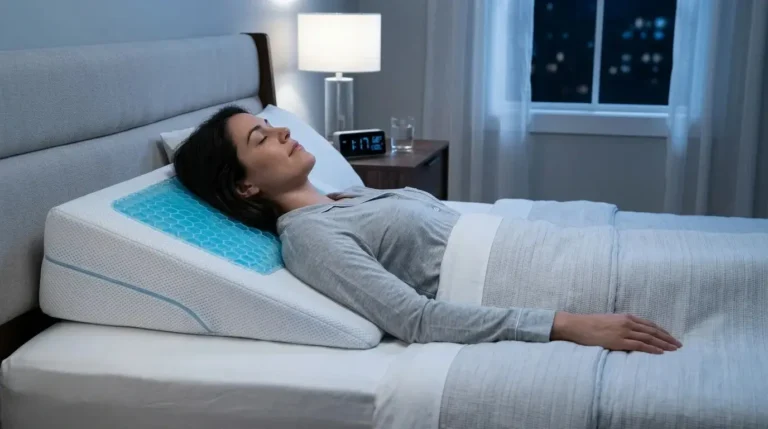
Folding Wedge Pillow The Space Saving, Travel Ready Sleep Solution That Folds Flat and Goes Anywhere
Most wedge pillows have one big drawback: they’re bulky. They take up a corner of your bed, they’re awkward to store in a small bedroom, and forget about packing one for a trip. A folding wedge pillow solves all of that. It gives you the same supportive incline, then folds down when you’re done, so it tucks into a closet, slides under the bed, or rides along in your luggage.
A folding wedge pillow is built to bend. Hinged sections let it collapse into a compact shape for storage and travel, then open back into a firm, stable slope when you need it. If you live in a small space, travel often, or simply want a wedge you can stash away during the day, this is the design for you. In this guide, you’ll learn exactly what a folding wedge pillow is, how it works, its biggest benefits, the best ways to use it, and how to choose one that holds up over time.

Key takeaways:
- A folding wedge pillow folds flat for compact storage and easy travel, then opens into a supportive incline.
- The sweet spot for upper-body use is a 30-to-45-degree incline, roughly 7 to 12 inches tall.
- Hinge quality matters as much as foam quality, since weak seams sag where the pillow bends.
- Memory foam holds its shape far better than cheap foam, especially at the fold lines.
What Is a Folding Wedge Pillow and How Does It Work?
A folding wedge pillow is a triangular support cushion built from connected sections that fold together. Instead of one solid block of foam, it’s made of panels joined by flexible hinges or seams. Open it up, and those panels lock into a firm incline. Fold it closed, and the whole pillow collapses into a thick, compact shape you can carry or store.
The clever part is in those hinge points. When the pillow is open, the panels press against each other to form one continuous slope that holds your weight. When you fold it, the panels bend at the seams and stack neatly. A good folding design feels just as stable as a fixed wedge when it’s open, with no wobble or sag where it bends.
Compare that to a standard solid wedge. A fixed wedge gives you reliable support, but it’s one bulky shape you can’t shrink. A folding wedge gives you that same support with the bonus of packing down small. For anyone short on space or always on the move, that flexibility changes everything.
Takeaway: A folding wedge pillow uses hinged panels to deliver a firm incline when open and a compact, packable shape when folded.
Key Benefits of a Folding Wedge Pillow
The folding design isn’t just a gimmick. It solves real problems that bulky fixed wedges create. Here’s where a folding wedge pillow truly earns its place.
Portability and Travel-Friendliness
This is the headline benefit. A folding wedge collapses into a small, carry-friendly shape that fits in a suitcase, a car trunk, or a tote bag. If you rely on an incline to sleep well, you no longer have to leave that comfort at home. Hotels, family visits, road trips, the relief travels with you.
Compact Storage
A folded wedge takes up a fraction of the space a solid one does. Slide it under the bed, tuck it into a closet, or stand it in a corner. For small apartments, dorm rooms, or shared bedrooms, that space-saving is a genuine advantage you’ll appreciate every day.
Versatility
Because it’s easy to move and store, a folding wedge gets used more. You can pull it out for sleep, fold it partway for reading, set it under your legs for elevation, then pack it away. One flexible pillow covers many situations without dominating your bedroom.
Easy to Reposition
A folding wedge is usually lighter and easier to handle than a dense solid block. That makes it simple to shift from under your back to under your legs, or to hand off to someone else who needs it.
Takeaway: A folding wedge pillow wins on portability, compact storage, and everyday versatility, making it ideal for travel and small spaces.
Best Use Cases for a Folding Wedge Pillow
A folding wedge pillow handles the same range of needs as any quality wedge, with the added perk of going wherever you go. Here’s where it shines.
Acid Reflux and Heartburn on the Go
Lying flat lets stomach acid creep back up, and that’s just as true in a hotel bed as your own. A folding wedge lifts your upper body so gravity keeps acid down, then packs away for the trip home. For a full breakdown of angles and positioning, see our guide on the Wedge Pillow for Acid Reflux.
Back Pain and Spinal Support
Placed under your upper body or your knees, a folding wedge supports your spine and eases lower back pressure. It’s especially handy if your back acts up while traveling, since you can bring proper support with you. Our Wedge Pillow for Back Pain page covers the best positions in detail.
Leg Elevation and Circulation
Fold the wedge to a gentle slope and slide it under your legs to raise your calves toward heart level. That lift improves circulation and reduces swelling, which is a real help after long flights or days on your feet. Our Wedge Pillow for Leg Elevation page explains the best positioning.
Post-Surgery Recovery
After many procedures, lying flat is uncomfortable. A folding wedge keeps you elevated and supported during recovery, and its lighter, easy-to-handle design makes it simple to reposition when moving hurts.
Travel and Temporary Stays
This is where the folding design has no rival. Whether you’re staying in a hotel, visiting family, or recovering away from home, a folding wedge brings your usual comfort along in a bag.
Takeaway: A folding wedge pillow eases reflux, back pain, and leg swelling, supports recovery, and travels easily for comfort anywhere.
Recommended Incline Angles and Heights
The right angle depends on what you’re using the wedge for, so there’s no single perfect number. Too little lift does nothing, and too much sends you sliding down the bed. Here’s a quick reference to guide you.
- Acid reflux, GERD, and snoring: Aim for a 30-to-45-degree incline, roughly 7 to 12 inches tall. This lifts your upper body enough to use gravity while staying comfortable for sleep.
- Upper-body back support: A 30-to-45-degree incline works well, paired with a small pillow under your knees to keep your spine aligned.
- Knee elevation for lower back relief: A gentler 6-to-8-inch lift raises your knees without straining your hips.
- Leg elevation for swelling and circulation: A 6-to-10-inch height lifts your calves toward heart level.
One detail matters with folding wedges specifically: make sure the panels lock firmly into your chosen angle so the pillow doesn’t shift or partially collapse while you sleep. Lift your whole upper body in one smooth slope rather than just your head, and start moderate, adjusting over a few nights until it feels right.
Takeaway: Use a 30-to-45-degree incline for upper-body needs and a gentle 6-to-10-inch lift for legs, making sure the folding panels lock securely.
Memory Foam vs. Regular Foam in a Folding Wedge Pillow
The foam inside your folding wedge decides how well it supports you and how long it lasts. With a folding design, the fold lines add an extra wear point, so foam quality matters even more. Let’s compare them directly.
Memory Foam Folding Wedge Pillows
Memory foam molds to your body and spreads weight evenly, which keeps pressure off your shoulders, neck, and back. For a folding wedge, its biggest strength is durability at the seams. Quality memory foam resists the breakdown that happens at fold points, so the incline stays firm and even where the panels meet. The contouring also makes each setting more comfortable. The one drawback is heat retention, so look for gel-infused or ventilated memory foam if you sleep warm.
Regular Foam Folding Wedge Pillows
Standard polyfoam costs less and weighs less, which can make a folding wedge even easier to carry. It works for occasional, lighter use. But it tends to compress over time, and with a folding design the fold lines are the first to sag. Once those seams flatten, your slope loses its shape and the pillow no longer holds a stable angle.
The bottom line: For a folding wedge you’ll use regularly, memory foam is the smarter investment. It contours for comfort and holds its shape at the hinge points, which is exactly where cheaper foam fails first.
Takeaway: Memory foam holds its shape at the fold lines far better than cheap foam, making it the more reliable choice for a folding wedge.
How to Choose the Best Folding Wedge Pillow
Not every folding wedge is built well. A poorly made one sags at the seams or won’t hold its angle. When you shop for the best folding wedge pillow, focus on these features.
Hinge and Seam Quality
This is the most important feature, unique to folding designs. The hinges or seams need to bend cleanly when folded yet stay firm and supportive when open. Look for reinforced seams, well-constructed fold points, and panels that lock together securely. If the pillow wobbles or sinks at the folds when open, it won’t give you stable support through the night.
Foam Density
Choose a medium to medium-firm foam. Too soft and you sink in and lose the angle. Too firm and it’s hard to relax on, and harder to fold neatly. A medium-firm memory foam holds your incline while staying comfortable and still bending cleanly at the seams.
Size and Length
For upper-body use, look for a wedge long enough to support you from hips to head, roughly 24 to 32 inches when open, so your neck doesn’t bend and your torso stays supported. Check the folded dimensions too, since the whole point is compact storage and travel.
Cover and Care
Choose a removable, machine-washable cover in a breathable fabric. A cover that survives frequent folding and travel keeps the pillow fresh and easy to clean. A built-in carry handle or travel strap is a nice bonus for portability.
Takeaway: Prioritize strong hinges and seams, medium-firm memory foam, enough length when open, and a durable, washable cover with travel-friendly features.
Best Sleeping Positions With a Folding Wedge Pillow
How you position yourself on the wedge decides how much relief you get. The best setup depends on your need and your favorite way to sleep. Here are the positions that work best.
Back Sleeping on an Upper-Body Incline
Lie back with your hips where the wedge flattens and your head near the top, so your whole torso follows the slope. This suits reflux, snoring, and breathing. Add a small pillow under your knees to keep your spine aligned and stop yourself from sliding down. Double-check the panels are locked firmly in place first.
Side Sleeping on the Wedge
Side sleepers can rest their upper body along the incline and place a pillow between their knees to keep the hips and spine in line. Choose a wider folding wedge so you have room to rest without rolling off, and make sure the folded sections feel solid under your weight.
Legs Elevated on the Slope
For circulation and swelling, lie flat and rest the backs of your legs along a gentler fold, with your calves and heels supported near the top. Make sure the wedge supports your full lower leg, not just your ankles, so your knees aren’t forced into an awkward bend.
Folded for Reading or Travel Support
Fold the wedge partway to create a shorter, steeper backrest for reading or sitting up. This is also the go-to setup in hotels or guest rooms, where you can shape the pillow to fit whatever bed you’re using.
Takeaway: Back sleeping on an incline suits reflux and snoring, side sleeping needs a knee pillow, and a partial fold works well for legs, reading, or travel.
Who Benefits Most From a Folding Wedge Pillow
A folding wedge pillow helps a wide range of people, but some gain far more than others. You’re an especially strong candidate if you fall into one of these groups.
- Frequent travelers who rely on an incline to sleep and don’t want to leave that comfort at home.
- People in small spaces like apartments, dorms, or shared bedrooms who need a wedge they can store away.
- Reflux or GERD sufferers who want consistent elevation whether they’re home or away.
- Anyone recovering from surgery or injury who needs portable, easy-to-handle support.
- People with swollen or tired legs who want gentle elevation they can pack for trips.
- Caregivers who need a support pillow they can move easily between rooms or patients.
- Minimalists who prefer one flexible pillow over a bulky fixed wedge that’s always in the way.
If even one of these describes you, a folding wedge pillow is likely worth the investment.
Takeaway: Travelers, people in small spaces, reflux sufferers, and recovering patients gain the most from a folding wedge pillow.
Common Mistakes to Avoid With a Folding Wedge Pillow
Even the right pillow can fall short if you choose or use it poorly. Here are the most common slip-ups and how to fix each one.
- Ignoring hinge quality. Weak seams sag where the pillow folds, ruining your support. Fix: choose a wedge with reinforced, well-built hinge points.
- Picking cheap foam to save money. It flattens fast, and the fold lines go first. Fix: invest in quality memory foam that holds its shape at the seams.
- Not locking the panels fully. A wedge that’s not fully open can shift or collapse overnight. Fix: confirm the panels are firmly locked before you lie down.
- Choosing a wedge that’s too short. A head-only wedge bends your neck and leaves your torso unsupported. Fix: pick one long enough to support your full upper body when open.
- Skipping knee support on an incline. Without it, you slide down and arch your back. Fix: add a small pillow under your knees.
- Setting the angle too steep. Past 45 degrees, you slide down and wake up flat. Fix: stay in the 30-to-45-degree range for upper-body use.
- Expecting instant results. Your body needs a few nights to adjust to the new angle. Fix: be patient and give it about a week.
Takeaway: Most folding wedge problems come from weak hinges, cheap foam, panels that aren’t fully locked, or a wedge that’s too short.
Care and Maintenance Tips for a Folding Wedge Pillow
A quality folding wedge pillow is built to last, but a little care keeps it performing for years, especially at the fold points. These simple habits go a long way.
- Wash the cover regularly. The cover takes the daily wear and travel grime, so washing it often keeps the whole pillow fresh. Choose one that’s removable and machine-washable.
- Never machine wash the foam. Memory foam can tear or break down in a washer. Spot-clean small stains with a damp cloth and mild soap, then let it air dry completely.
- Don’t store it folded too tightly for too long. Constant tight compression can stress the seams over time. When possible, store it open or loosely folded to protect the hinge points.
- Keep it dry. Moisture is the enemy of foam. Dry any spills quickly and avoid leaving the wedge in damp conditions, including a humid suitcase.
- Let it breathe after travel. Once you unpack it, give the foam a little time to expand fully back into shape before use.
Takeaway: Wash the cover, spot-clean the foam, avoid long tight folding, and keep it dry to protect the seams and extend its life.
A Quick Word on Medical Care
A folding wedge pillow is one of the most practical ways to bring supportive, incline-based comfort wherever you go. By keeping your body at a helpful angle, it eases everyday issues like reflux, back strain, and swollen legs, at home or on the road.
That said, a folding wedge pillow supports your comfort. It is not a medical treatment or a cure for any condition. If you have frequent reflux, chronic back pain, loud snoring with breathing pauses, or persistent leg swelling, talk to your doctor. Conditions like GERD and sleep apnea need proper diagnosis and care, so use the wedge as one helpful part of a plan your healthcare provider approves.
Frequently Asked Questions About Folding Wedge Pillows
How long does a folding wedge pillow take to work?
Many people feel relief within the first few nights, though it can take a week or so to fully adjust to the new sleeping angle. Be patient and use the wedge consistently. Pairing it with good habits, such as finishing meals two to three hours before bed for reflux, speeds up the results you’ll notice.
Who should buy a folding wedge pillow instead of a fixed one?
A folding wedge is ideal if you travel often, live in a small space, or want a wedge you can store away during the day. It’s also great for caregivers who move support between rooms and anyone recovering away from home. If you have a single, unchanging need and plenty of bedroom space, a solid fixed wedge works fine, but the folding design adds portability most people appreciate.
How do I clean and store a folding wedge pillow?
Never machine wash the foam, as that can damage it. Use a removable, machine-washable cover and wash that regularly, and spot-clean the foam with a damp cloth and mild soap, then air dry it fully. For storage, avoid keeping it folded too tightly for long stretches, since constant compression can stress the seams. Store it open or loosely folded when possible.
Can I travel with a folding wedge pillow?
Yes, that’s one of its biggest advantages. A folding wedge collapses into a compact shape that fits in a suitcase, car trunk, or tote bag, so you can bring your usual incline comfort to hotels, family visits, and trips. Look for a model with a carry handle or travel strap, and let the foam expand fully once you unpack it before use.
Is memory foam or regular foam better for a folding wedge pillow?
Memory foam is generally the better choice. It contours to your body, spreads weight evenly, and resists the breakdown that happens at fold lines, which is exactly where cheap foam fails first. Regular polyfoam is lighter and cheaper but tends to sag at the seams over time. If you sleep warm, look for gel-infused or ventilated memory foam.
What is the best height and angle for a folding wedge pillow?
For upper-body needs like reflux and snoring, aim for a 30-to-45-degree incline, which is roughly 7 to 12 inches tall when open. For leg elevation, a 6-to-10-inch height works well, and for knee support under the lower back, 6 to 8 inches is ideal. Start moderate and adjust over a few nights until it feels supportive without making you slide down.
Is a folding wedge pillow as supportive as a solid one?
A quality folding wedge can match a solid wedge for support when it’s fully open and the panels are locked in place. The key is hinge and seam quality. Strong, reinforced fold points keep the slope firm and even, while cheap construction sags where the pillow bends. Always confirm the panels are fully open and locked before lying down.
How does a folding wedge pillow work?
It’s built from connected panels joined by flexible hinges or seams. When open, the panels press together to form a firm, continuous incline that holds your weight. When folded, the panels bend at the seams and stack into a compact shape. A well-made folding wedge feels just as stable as a fixed wedge when open, with no sag at the fold points.
What is a folding wedge pillow used for?
A folding wedge pillow elevates part of your body on a supportive slope, then folds down for storage and travel. People use it to ease acid reflux, reduce snoring, relieve back pain, elevate the legs for better circulation, and recover comfortably after surgery. Its folding design makes it especially popular with travelers and anyone short on bedroom space.